
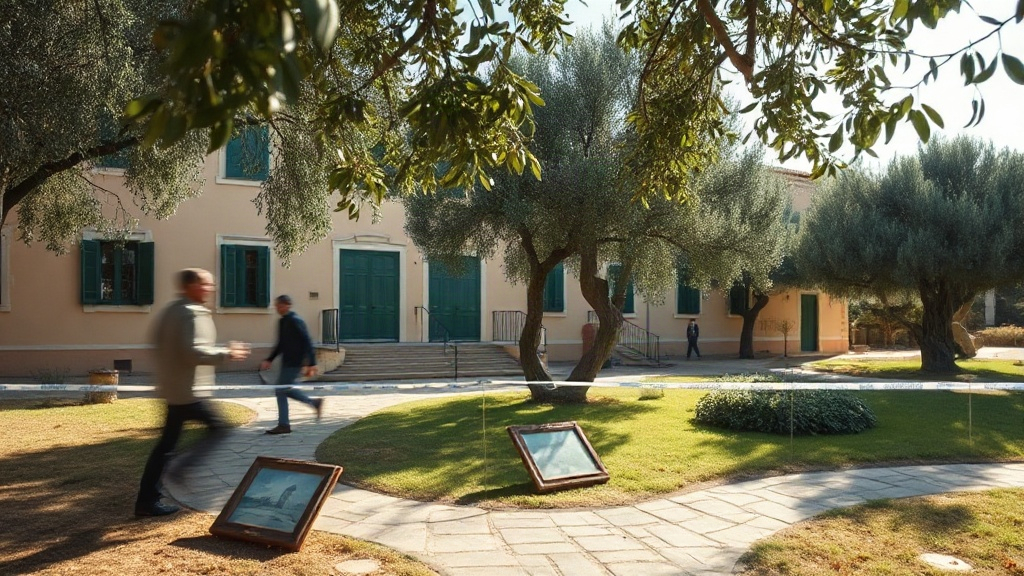
It was a quiet morning on the French Riviera until two figures slipped into the Musée Renoir in Cagnes-sur-Mer and walked out with four artworks under their arms. The theft, confirmed by Mayor Bryan Masson, has sent shockwaves through the art community and left local residents stunned. But perhaps the strangest detail is this: as the thieves fled, they dropped two of the stolen pieces in the museum garden. Whether by panic or design, that moment may prove to be their undoing.
What Happened at the Renoir Museum?
The break-in occurred in the early hours of Monday, September 8, 2026, at the museum dedicated to the life and work of Pierre-Auguste Renoir. Located in the hills above Nice, the museum is housed in the Domaine des Collettes, the farmhouse where Renoir spent his final years. It holds a modest but emotionally resonant collection of paintings, sculptures, and personal effects.
According to Mayor Masson, the two individuals forced entry and made off with four works. However, as they escaped through the garden, two of those works were abandoned. Police have not yet identified the suspects, and no arrests have been made. The remaining two stolen pieces are still missing, and authorities have launched a full investigation involving local police and specialized art crime units.
The Museum's Significance
The Renoir Museum is not the Louvre or the Musée d'Orsay. It is a small, intimate site that draws art lovers seeking a connection to the artist's final chapter. Renoir moved to Cagnes-sur-Mer in 1907, seeking relief from rheumatoid arthritis in the Mediterranean climate. He continued to paint until his death in 1919, often with a brush strapped to his hand. The museum preserves his studio, his wheelchair, and many late works that reflect a shift toward softer, more luminous forms.
This context makes the theft particularly painful. The works taken were not just valuable commodities; they were pieces of local heritage. The museum's collection is relatively small, and each item carries deep significance. Losing even two pieces is a blow to the community and to art historians who study Renoir's final period.
Why This Heist Stands Out
Art theft is not new, but the circumstances here are unusual. First, the target was not a major institution with high-tech security but a small municipal museum. Second, the thieves chose a daytime entry, suggesting either desperation or familiarity with the museum's routines. Third, the act of dropping two artworks during the escape is puzzling. It could indicate that the thieves were interrupted, that the works were too cumbersome, or that they were simply careless.
What is clear is that security at small cultural sites remains a critical vulnerability. While major museums have invested heavily in surveillance and trained guards, smaller venues often rely on basic alarms and the assumption that their collections are not prime targets. This heist shatters that assumption.
The Growing Trend of Art Crime
Interpol estimates that art and cultural property crime is a multi-billion-dollar illicit industry, though exact figures are hard to pin down. High-profile thefts, like the 1990 Isabella Stewart Gardner Museum heist, capture headlines, but the vast majority of art crimes involve smaller institutions, private homes, and archaeological sites. The Renoir Museum theft fits a pattern of criminals exploiting softer targets.
In recent years, French authorities have stepped up efforts to combat art trafficking, including the creation of a dedicated police unit and international cooperation through databases like INTERPOL's Stolen Works of Art. Yet the sheer volume of cultural sites makes comprehensive protection nearly impossible. The Renoir heist is a reminder that no collection is truly safe.
What Was Stolen and What Was Left Behind
Authorities have not released a full list of the stolen works, likely to avoid tipping off potential buyers. However, sources close to the investigation say the four pieces taken were small in scale, possibly drawings or small paintings that could be easily concealed. The two works abandoned in the garden have been recovered and are being examined for forensic evidence.
This detail is crucial. The abandoned works may hold fingerprints or DNA, and they could provide leads on the thieves' identities. Police are also reviewing CCTV footage from the surrounding area, though the museum's own cameras may have been limited. The garden, with its olive trees and winding paths, offers multiple escape routes toward the hills or the sea.
The Local Reaction
Residents of Cagnes-sur-Mer have expressed shock and sadness. The museum is a beloved landmark, not just a tourist stop. "It feels like someone broke into our home," one local shopkeeper said. The mayor has vowed to increase security and to recover the missing works. "We will not let this stand," Masson told reporters. "These are not just paintings; they are our history."
The theft has also reignited debates about how to balance public access with security. The museum's charm lies in its authenticity, but that very authenticity makes it vulnerable. Some have called for more funding for guards and modern alarms, while others argue that the museum's spirit should not be compromised by fortress-like measures.
The Broader Implications for Art Security
This heist is unlikely to be an isolated incident. As the art market continues to boom, with record prices for Impressionist works, the incentive for theft grows. A small Renoir sketch can fetch tens of thousands of euros on the black market, and even a fraction of that is a significant payday for a criminal. The challenge for law enforcement is that stolen art often disappears into private collections or is used as collateral in other criminal dealings.
Experts say the key to prevention is not just technology but also community awareness. Local vigilance and rapid reporting can make a difference. In this case, the thieves were seen by at least one witness, and that testimony may prove vital. The fact that two works were dropped suggests the escape was not as smooth as planned, which could indicate that someone raised an alarm.
What Happens Next?
The investigation is ongoing, and police are appealing for anyone with information to come forward. The recovered works will be examined and eventually returned to display, though the museum may choose to keep them in storage temporarily. The missing pieces remain the priority, and authorities are coordinating with international databases to flag them if they surface on the market.
For now, the Renoir Museum remains open, but with a heavier police presence. Visitors can still walk through the rooms where Renoir once worked, but the sense of innocence has been shaken. The heist has left a wound that will take time to heal, and it has forced a reckoning about how we protect the art we hold dear.
Frequently Asked Questions
What was stolen from the Renoir Museum?
Four artworks were taken, though their exact titles and descriptions have not been released by authorities. Two of the four were dropped in the museum garden during the escape and have been recovered. The remaining two are still missing.
Who is responsible for the Renoir Museum theft?
No suspects have been identified or arrested. Police are investigating and have described the perpetrators as two individuals. They are reviewing security footage and forensic evidence from the recovered works.
How can stolen art be recovered?
Stolen art is often recovered through a combination of police work, international databases, and sometimes luck. When a work is reported stolen, its details are shared with organizations like INTERPOL. If it appears at an auction or is offered for sale, authorities can intervene. Public tips also play a crucial role.
Is the Renoir Museum still open to visitors?
Yes, the museum remains open, but with increased security measures. Visitors may notice a stronger police presence and possibly restricted access to certain areas while the investigation continues.