
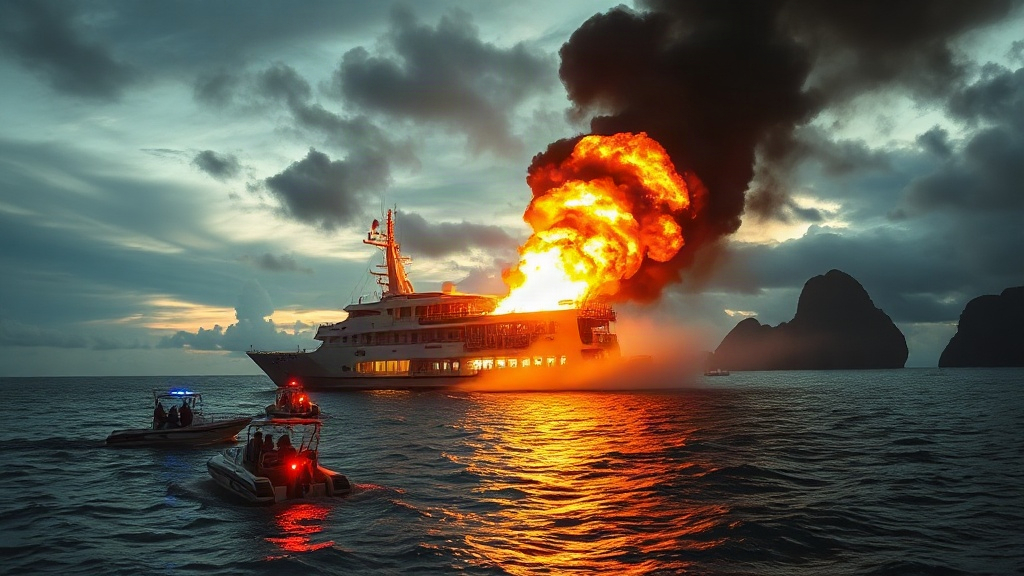
The waters off the idyllic island of Palawan in the Philippines turned into a scene of tragedy on Wednesday as a passenger ferry caught fire, leaving at least five people dead and 86 others missing. The vessel, which was carrying more than 200 passengers and crew, was nearing the popular tourist destination of Coron when the blaze broke out. As rescue teams scrambled to save lives, the incident has once again cast a harsh spotlight on maritime safety standards in a nation that relies heavily on inter-island ferries for transportation.
The fire erupted in the early hours as the ferry, identified as the MV Lady Mary Joy 3, was approaching its final destination. According to local authorities, many passengers were asleep when the flames began to spread rapidly through the vessel. The cause of the fire remains under investigation, but initial reports suggest it may have started in the engine room or a cargo area. Within minutes, the ship was engulfed in thick black smoke, causing panic among those on board. Some passengers reportedly jumped into the sea to escape the inferno, while others were trapped below deck.
The Philippine Coast Guard immediately launched a massive search and rescue operation, deploying multiple vessels and helicopters to the area. Fishermen and nearby boats also joined the effort, pulling survivors from the water. As of the latest update, 65 people have been rescued, but the fate of 86 others remains unknown. The death toll is expected to rise as search teams continue to comb the area and inspect the charred wreckage. Local hospitals have been placed on high alert to treat the injured, many of whom are suffering from burns and smoke inhalation.
Coron, a municipality in the province of Palawan, is renowned for its stunning limestone cliffs, crystal-clear lagoons, and world-class diving spots. It attracts thousands of tourists each year, both domestic and international. The ferry was a common mode of transport for locals and visitors traveling between the islands. The tragedy has sent shockwaves through the community, with many residents expressing grief and frustration over what they see as a preventable disaster.
Philippine maritime safety has long been a contentious issue. The country's archipelagic geography means that ferries are a lifeline for millions of people, but aging vessels, overcrowding, and lax enforcement of safety regulations have led to numerous accidents over the years. In 1987, the passenger ferry Doña Paz sank after colliding with an oil tanker, killing an estimated 4,386 people in the world's deadliest peacetime maritime disaster. More recently, in 2013, the MV St. Thomas Aquinas collided with a cargo ship near Cebu, leaving over 100 dead. These incidents highlight a systemic problem that continues to plague the nation's maritime industry.
In the wake of the latest fire, questions are already being raised about the ferry's compliance with safety protocols. Were there enough life jackets on board? Was the crew properly trained for emergency evacuations? Why did the fire spread so quickly? Investigators from the Philippine Coast Guard and the Maritime Industry Authority (MARINA) have begun a thorough inquiry. The vessel's owner and operator will likely face intense scrutiny, and there are calls for stricter enforcement of safety standards, including regular inspections and modern fire suppression systems.
The human toll of this disaster is staggering. Families of the missing are gathered at ports and hospitals, desperately awaiting news of their loved ones. Social media has been flooded with messages of hope and condolences, with the hashtag #CoronFerryFire trending. The local government has set up crisis centers to provide support and information to affected families. The Philippine Red Cross has also mobilized volunteers to assist in the search and rescue efforts and to provide psychological first aid to survivors and relatives.
As the search continues, the incident serves as a grim reminder of the risks faced by those who travel by sea in developing nations. While the Philippines has made strides in improving maritime safety in recent years, including the implementation of stricter vessel standards and crew training programs, enforcement remains inconsistent. Corruption, lack of resources, and the sheer number of vessels operating in remote areas make it difficult to ensure compliance. The government has vowed to take action, but for the families of the victims, such promises offer little comfort in their time of grief.
The international community has also expressed sympathy and offered assistance. Nearby countries, including Malaysia and Indonesia, have offered to help with search and rescue operations if needed. The United Nations and various humanitarian organizations have issued statements of condolence. Meanwhile, tourism operators in Coron are bracing for potential impacts, as the tragedy may deter visitors in the short term. However, many locals are urging the government to focus on the victims and their families rather than on economic concerns.
As the sun sets over the waters where the MV Lady Mary Joy 3 now lies partially submerged, the search for survivors continues. Rescue teams are working around the clock, hoping to find more people alive. But as each hour passes, hope dims. The fire has not only claimed lives but has also exposed the vulnerabilities of a system that many depend on daily. It is a heartbreaking reminder of the fragility of life and the urgent need for change.
In the coming days, the focus will shift from rescue to recovery and investigation. The true cause of the fire will be determined, and those responsible may be held accountable. But for now, the priority is to find the missing and provide closure to their families. The people of the Philippines, known for their resilience and faith, will undoubtedly come together to support one another through this difficult time. Yet, one cannot help but wonder how many more tragedies must occur before real, lasting reforms are implemented.
The world watches and waits, hoping for a miracle but preparing for the worst. The fire on the MV Lady Mary Joy 3 is not just a Philippine tragedy; it is a global one, highlighting the universal need for safety and accountability in all forms of transportation. As the investigation unfolds, the lessons learned must not be forgotten. The lives lost and those still missing deserve nothing less than a thorough, transparent, and transformative response.
What We Know So Far
The timeline of events is still being pieced together, but here is a summary of the key facts. The ferry departed from a port in the province of Palawan and was en route to Coron. It was carrying 205 passengers and 35 crew members, according to the latest manifest. The fire broke out around 5:00 a.m. local time, when the vessel was approximately one nautical mile from Coron's port. Distress calls were immediately sent, and nearby vessels responded quickly. The Philippine Coast Guard arrived on the scene within 30 minutes, but the fire had already spread extensively.
Survivors have described chaotic scenes, with people screaming and pushing to get to the upper decks. Some passengers broke windows to escape, while others jumped into the sea with life rings. The water was reportedly calm, which aided in the rescue efforts. However, the rapid spread of the fire and the darkness of the early morning made the situation extremely dangerous. Many survivors were found clinging to debris or floating with life jackets. The Coast Guard has confirmed that at least five bodies have been recovered, but the exact number of casualties remains unclear.
Why This Matters
This tragedy is not an isolated incident. It is part of a broader pattern of maritime accidents in the Philippines that have claimed thousands of lives over the decades. The country's reliance on ferries is a necessity due to its geography, but it also means that safety failures have devastating consequences. The MV Lady Mary Joy 3 fire is a stark reminder that many vessels operating in Philippine waters may not meet international safety standards. It raises urgent questions about the enforcement of regulations, the training of crew members, and the maintenance of aging fleets.
For the tourism industry, the incident could have significant repercussions. Coron is a major draw for international travelers, and any perception of unsafe transport could lead to a decline in visitors. This, in turn, would affect the livelihoods of thousands of people who depend on tourism. The government will need to balance the immediate humanitarian response with long-term measures to restore confidence in maritime travel. But first, it must address the root causes of the accident and ensure that such a tragedy never happens again.
What Happens Next
The search and rescue operation is expected to continue for at least 72 hours, after which the focus will shift to recovery. The Philippine Coast Guard has deployed divers to inspect the sunken portions of the ferry, where some passengers may be trapped. The investigation will involve multiple agencies, including MARINA, the Philippine National Police, and possibly international experts. The findings will be made public, and recommendations for safety improvements will be issued. In the meantime, the families of the victims will need support, both financial and emotional.
The government has announced that it will provide assistance to the affected families, including burial expenses for the deceased and financial aid for the injured. Non-governmental organizations are also stepping in to offer counseling and other services. The tragedy has once again united the nation in grief, but it has also sparked a renewed call for accountability. Many are demanding that the ferry operator be held responsible if negligence is found. Only time will tell whether this disaster will lead to meaningful change.
Frequently Asked Questions
How many people were on board the ferry?
According to the latest reports, there were 205 passengers and 35 crew members on board, for a total of 240 people. These numbers are based on the official manifest, but there is a possibility that some passengers were not listed, as is common in the region. The exact number may be revised as the investigation proceeds.
What caused the fire on the ferry?
The cause of the fire is still under investigation. Initial reports suggest it may have started in the engine room or a cargo area, but this has not been confirmed. Investigators will examine the wreckage, interview survivors and crew, and review maintenance records to determine the exact cause. It may take weeks or even months to complete the investigation.
How many people have been rescued so far?
As of the latest update, 65 people have been rescued alive. Many are being treated for injuries, including burns, smoke inhalation, and hypothermia. Some survivors were pulled from the water by nearby vessels and fishermen. The search for the 86 missing individuals is ongoing, and the number of rescued may increase as more boats join the effort.
What is the government doing to help the victims' families?
The Philippine government has pledged to provide financial assistance to the families of the deceased and injured. The Department of Social Welfare and Development has set up help desks at ports and hospitals. The Philippine Red Cross is offering psychological first aid and other support services. Local governments in Palawan are also coordinating efforts to provide temporary shelter and food to displaced families.
Has this type of accident happened before in the Philippines?
Yes, unfortunately. The Philippines has a history of ferry disasters, including the 1987 Doña Paz collision that killed over 4,000 people and the 2013 MV St. Thomas Aquinas collision that killed over 100. These incidents have led to calls for stricter safety regulations, but enforcement remains a challenge. Each new tragedy reignites the debate over how to improve maritime safety in the country.