
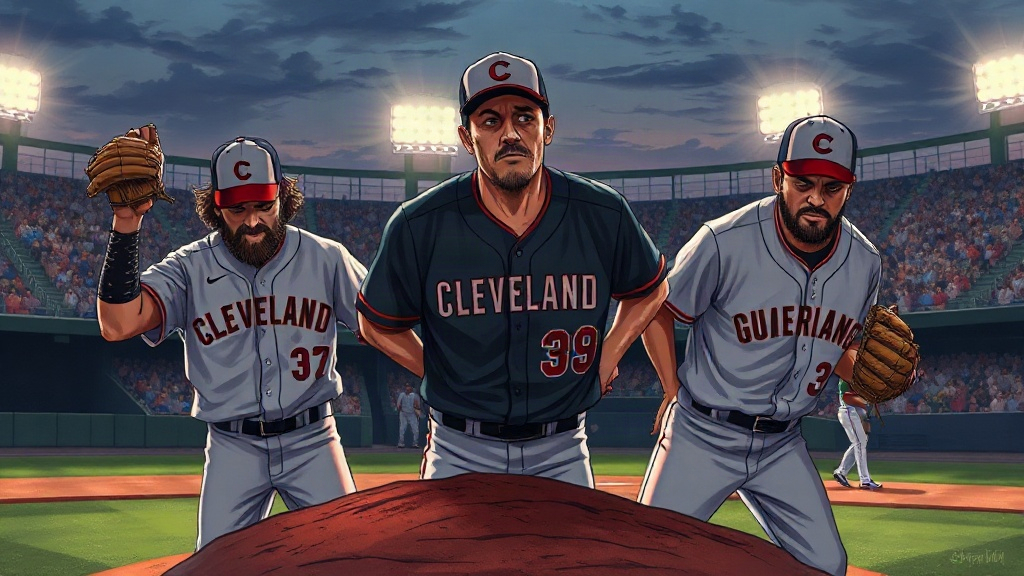
The Cleveland Guardians have leaned on their starting rotation all season, and for good reason. The group has been among the best in baseball, keeping the team in contention and masking some offensive inconsistencies. But as the summer heat intensifies and the innings pile up, subtle cracks are beginning to show. In recent starts, three key members of the rotation have displayed signs of fatigue and stress that could have serious implications for the Guardians' playoff push. Recognizing these warning signs now is crucial, because a tired starter in August can become an injured or ineffective one in September.
Why Starting Pitcher Fatigue Matters in Cleveland
Pitcher fatigue is not just about velocity dips or higher ERAs. It manifests in command loss, reduced movement on secondary pitches, longer innings, and a greater susceptibility to hard contact. For a team like the Guardians, whose identity is built on pitching and defense, any decline in starter effectiveness ripples through the entire roster. The bullpen gets taxed, the defense faces more pressure, and the offense is forced to climb out of early deficits. The Guardians do not have a deep reservoir of proven major league starters waiting in Triple-A, so managing the workload of their current rotation is a delicate balancing act.
Starter 1: Tanner Bibee's Subtle Regression
Tanner Bibee has been the de facto ace of this staff, but his last few outings have raised eyebrows. While his surface numbers remain respectable, the underlying metrics tell a different story. Bibee's fastball velocity has dipped by nearly a full tick in his last three starts, and his slider, usually a wipeout pitch, has flattened out. Hitters are making more contact in the zone, and Bibee is working deeper counts more often. He has also shown frustration on the mound, a departure from his normally composed demeanor. The Guardians need Bibee at his best down the stretch, but right now he looks like a pitcher who is grinding through a dead arm phase.
Starter 2: Gavin Williams' Command Issues
Gavin Williams has electric stuff, but his command has been erratic lately. In his last two starts, Williams has walked more batters than usual and missed badly with his fastball up in the zone. His delivery appears slightly out of sync, and he is struggling to repeat his release point. This is a classic sign of fatigue, as the body compensates for tired legs by altering mechanics. Williams is a young pitcher still building up his innings tolerance, and the Guardians have been cautious with his workload. However, the recent command lapses suggest that the fatigue is not just physical but also mental. Williams looks like a pitcher who is overthinking every pitch, and that is a dangerous spiral for a young arm.
Starter 3: Ben Lively's Heavy Workload
Ben Lively has been a revelation this season, far exceeding expectations and providing stability at the back of the rotation. But Lively is also on pace to blow past his previous career high in innings pitched. The Guardians have ridden him hard, and it is starting to show. Lively's cutter, his go-to pitch, has lost some of its bite, and he has been leaving too many pitches over the heart of the plate. His last start was a grind, with multiple deep counts and hard-hit outs. Lively is a veteran who knows how to compete, but even he admitted after his last outing that his body is feeling the wear and tear. The Guardians must be careful not to push him too far, because a fatigued Lively is far less effective than the fresh version that carried them through the first half.
The Bigger Picture: Rotation Management in a Playoff Race
The Guardians are in a tight race for the AL Central crown, and every game matters. That makes it tempting to keep running their best starters out there regardless of fatigue signals. But that short-term thinking can backfire spectacularly. A starter who breaks down in September is of no use in October. The Guardians' front office and coaching staff have to weigh the immediate need for wins against the long-term health of their pitchers. This is not a new dilemma, but it is especially acute for a team that relies so heavily on its rotation.
One option is to give each of these three starters an extra day of rest between starts when the schedule allows. The Guardians have some off days coming up, and they could also use a spot starter from the minors to create a six-man rotation for a couple of turns. Another consideration is to limit pitch counts more aggressively in games where the Guardians have a comfortable lead. Too often this season, starters have been left in to finish innings with high pitch counts when the bullpen could have taken over. That kind of aggressive usage is not sustainable over a full season.
What the Guardians Can Do Right Now
The Guardians are not helpless in this situation. They have options, even if they are not perfect ones. First, they can lean more on their bullpen, which has been a strength this year. The relievers are fresh and have proven they can handle high-leverage situations. Giving a tiring starter a quicker hook is not a sign of weakness; it is smart management. Second, the Guardians can use their Triple-A depth to give a spot start or two. While no one in Columbus is a sure thing, a fresh arm can sometimes outperform a fatigued one. Third, the coaching staff can work with these three starters on mechanical adjustments that reduce stress on their arms. Sometimes a small tweak in delivery or pitch selection can make a big difference.
It is also important to remember that fatigue is not always linear. A pitcher can look terrible for two starts and then suddenly find his rhythm again. The key is to not overreact to a small sample size. However, the signs we are seeing from Bibee, Williams, and Lively are not just one bad outing; they are trends that have developed over several starts. That is what makes them concerning. The Guardians' season could hinge on how they handle this situation over the next few weeks.
Looking Ahead: A Defining Stretch
The Guardians are entering a crucial stretch of games against division rivals, and they cannot afford to have their starters scuffle. But they also cannot afford to lose any of these pitchers to injury. This is where manager Stephen Vogt and pitching coach Carl Willis will earn their pay. They need to read the signs, trust their eyes, and make tough decisions. If they can navigate this fatigue issue successfully, the Guardians will be a dangerous team in October. If they fail, the rotation that carried them all year could become their undoing. The next few weeks will tell us a lot about the Guardians' true championship mettle.
Frequently Asked Questions
What are the early signs of pitcher fatigue in baseball?
Early signs of pitcher fatigue include a drop in fastball velocity, reduced movement on breaking pitches, loss of command and control, longer innings, and visible frustration on the mound. Pitchers may also alter their mechanics to compensate for tired legs, leading to inconsistent release points and more walks.
How do the Cleveland Guardians typically manage starting pitcher workloads?
The Guardians have historically been cautious with young pitchers, often limiting innings and using pitch counts. They also rely on their analytics department to monitor biomechanical data and adjust rest schedules. However, in a tight playoff race, they sometimes extend starters beyond their usual limits, which can lead to fatigue.
Can a tired starting pitcher recover mid-season without missing starts?
Yes, sometimes a tired pitcher can recover with extra rest days, reduced pitch counts, or a brief stint in the bullpen. However, if the fatigue is severe, a short stint on the injured list may be necessary. Teams often try to avoid that by giving spot starts to minor leaguers and using a six-man rotation temporarily.
What impact does starting pitcher fatigue have on a team's bullpen?
When starters are fatigued, they tend to exit games earlier, forcing the bullpen to cover more innings. Over time, this can lead to bullpen fatigue as well, creating a cascading effect. That is why teams must balance the workload across the entire pitching staff, not just the starters.
Are the Guardians' rotation problems a sign of deeper issues?
Not necessarily. Every rotation goes through stretches of fatigue during a long season. The key is how the team responds. If the Guardians can manage the workload of Bibee, Williams, and Lively effectively, they should be fine. If they ignore the warning signs, they risk injuries and a late-season collapse.