
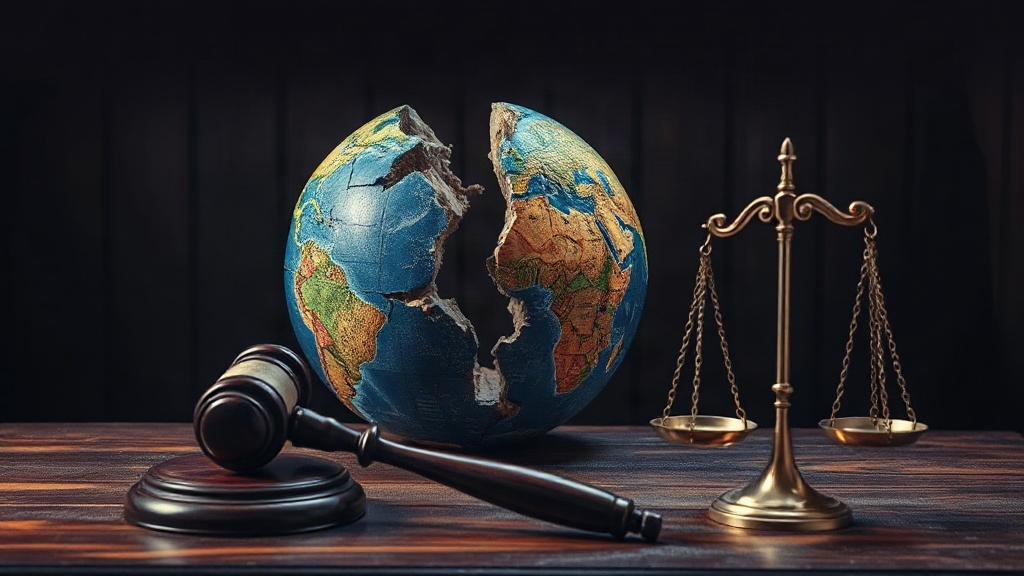
When the United Nations General Assembly convenes, the world's attention often drifts to the usual diplomatic theater. But this year, the opening of high-level meetings was overshadowed by a stark reminder of how fragile the international legal system has become. News broke that Washington had prepared sanctions against the International Criminal Court (ICC), targeting its bank accounts, software providers, insurers, and even individual staff members. The move, aimed at shielding Israel from accountability, sent shockwaves through the halls of multilateralism. It was not just another policy spat; it was a direct assault on the very institution that embodies the promise of global justice.
For decades, the ICC has stood as a beacon of hope for victims of war crimes, crimes against humanity, and genocide. Yet, in recent years, it has been systematically undermined by powerful states unwilling to subject themselves or their allies to the same standards they demand of others. Israel, with unwavering support from the United States, has repeatedly rejected the court's jurisdiction and dismissed its investigations as politically motivated. The sanctions represent a dramatic escalation, transforming rhetorical opposition into concrete economic warfare against international justice.
The ICC Under Siege: A New Low in US-Israel Relations with International Law
The sanctions announced by the US Treasury Department would freeze any ICC assets held in American financial institutions and prohibit US persons from providing goods or services to the court. This includes software companies that supply case management systems, insurance firms that cover the court's operations, and even banks that facilitate its transactions. The practical effect could be crippling: the ICC relies on global financial infrastructure to pay staff, conduct investigations, and protect witnesses. By cutting off these lifelines, the US is effectively trying to strangle the court into submission.
This is not the first time the US has clashed with the ICC. In 2002, the Bush administration famously unsigned the Rome Statute and passed the American Service-Members' Protection Act, authorizing military force to free any American detained by the court. But the current sanctions go further, targeting the court's very ability to function. The message is clear: if you dare to investigate US allies, you will pay a price.
Israel's role in this saga is equally troubling. The ICC opened a formal investigation in 2021 into alleged war crimes in the Palestinian territories, including actions by Israeli forces and Hamas. Israel has refused to cooperate, calling the probe biased. The US has echoed this position, arguing that the ICC has no jurisdiction over Israel because it is not a party to the Rome Statute. Yet the court's members include Palestine, which acceded in 2015, giving it the right to refer situations to the prosecutor. This legal nuance is often lost in the political noise, but it underscores the broader battle over who gets to define the boundaries of international law.
Why the Sanctions Matter Beyond the ICC
The implications of these sanctions extend far beyond the court itself. They signal to other authoritarian regimes that they can act with impunity, confident that the world's most powerful nations will shield them if they are useful allies. They weaken the already fragile web of international institutions that rely on US funding and cooperation. And they undermine the principle of universal jurisdiction, the idea that certain crimes are so heinous that any country can prosecute them, regardless of where they occur.
For the ICC, the sanctions are a existential threat. The court has a modest budget of around €150 million and relies on voluntary contributions and assessed dues from its 123 member states. The US is not a member, but its financial clout means that even non-members can exert pressure. If the sanctions force banks and service providers to choose between doing business with the ICC or with the US, most will choose the latter. The result could be a court that is unable to issue arrest warrants, gather evidence, or protect its staff.
A Coalition of the Willing: How Nations Are Pushing Back
Amid this dark backdrop, a group of nations is refusing to surrender. On Friday, representatives from like-minded countries will gather to discuss concrete steps to support the ICC and hold violators accountable. This coalition, which includes traditional US allies in Europe as well as countries from Africa, Asia, and Latin America, is exploring ways to circumvent the sanctions. Options include creating a special fund to support the court, providing alternative banking channels, and offering political cover for ICC staff.
The effort is not just about saving the ICC; it is about preserving the idea that international law applies to everyone. As one diplomat put it, "If we allow the powerful to exempt themselves from accountability, we are no better than the law of the jungle." The coalition's strategy is twofold: first, to mitigate the immediate damage of the sanctions, and second, to build a longer-term movement to reform the international legal architecture so that it is less vulnerable to unilateral bullying.
European countries, in particular, face a dilemma. Many are close allies of the US and rely on it for security. But they also strongly support the ICC and have incorporated the Rome Statute into their domestic laws. The sanctions put them in a bind: complying with US sanctions could violate their own legal obligations to cooperate with the court. Some EU members are already exploring blocking statutes that would nullify the US measures within their jurisdictions. This could set the stage for a transatlantic legal showdown.
The Role of the UN General Assembly
The UN General Assembly, where the sanctions news broke, is the natural venue for this pushback. Unlike the Security Council, where the US wields a veto, the General Assembly operates on a one-country-one-vote basis. Resolutions there are not binding, but they carry moral weight and can mobilize global opinion. A resolution condemning the sanctions and calling for support for the ICC could isolate the US and Israel, even if it cannot force them to change course.
Moreover, the General Assembly can request an advisory opinion from the International Court of Justice (ICJ) on the legality of the sanctions. The ICJ, which is the UN's principal judicial organ, has already been asked to weigh in on the legal consequences of Israel's occupation of Palestinian territories. An opinion on the sanctions would further delegitimize them and provide legal ammunition for affected states and individuals.
The Path Forward: Collective Action or Impunity?
The choice facing the international community is stark. One path leads to a world where might makes right, where powerful states can commit atrocities and then shield themselves and their allies from accountability. The other path requires collective action, often messy and slow, to uphold the rule of law. The ICC sanctions are a test of whether the latter is still possible.
History offers some hope. When the US sanctioned the ICC in the early 2000s, the court survived and even thrived, eventually gaining the cooperation of over 120 states. When South Africa failed to arrest Sudanese President Omar al-Bashir despite an ICC warrant, the court's authority was damaged but not destroyed. The lesson is that international law is resilient, but only if enough states are willing to defend it.
The coalition gathering on Friday is a sign that the tide may be turning. By pooling resources and coordinating their responses, these nations can create a protective shield around the ICC. They can also use their economic and diplomatic leverage to make the cost of sanctions higher for the US. For example, European countries could threaten to withdraw cooperation on other issues, such as intelligence sharing or trade, if the US does not back down. This is high-stakes diplomacy, but the alternative is a world where lawlessness reigns.
What Ordinary Citizens Can Do
It is easy to feel powerless in the face of such geopolitical drama. But individuals can make a difference. Supporting organizations that monitor international justice, contacting elected representatives to urge support for the ICC, and raising awareness on social media all help. The fight for accountability is not just for diplomats; it is for anyone who believes that victims of atrocities deserve justice.
Moreover, the battle over the ICC is part of a larger struggle over the future of global governance. Climate change, pandemics, and cyber threats all require international cooperation. If the legal order collapses, so does the foundation for addressing these shared challenges. The sanctions are therefore not just an attack on one court; they are an attack on the very idea of a rules-based world.
Frequently Asked Questions
What exactly are the US sanctions against the ICC?
The sanctions target the ICC's financial assets, software providers, insurers, and staff. They aim to cripple the court's ability to operate by cutting off its access to the global financial system. This includes freezing any ICC funds in US banks and prohibiting US companies from doing business with the court.
Why is the US targeting the ICC now?
The US is acting to protect Israel from potential ICC prosecution for alleged war crimes in the Palestinian territories. The Trump administration, like previous administrations, opposes any international court asserting jurisdiction over US citizens or allies. The sanctions are a way to pressure the court to drop its investigations.
How can other countries help the ICC?
Countries can provide financial support to the ICC through voluntary contributions, establish alternative banking channels to bypass US sanctions, and offer political and diplomatic backing. They can also pass domestic laws that refuse to enforce the US sanctions, creating safe havens for ICC operations.
What happens if the ICC is unable to function?
If the ICC is crippled, it would embolden governments and armed groups to commit atrocities without fear of consequences. It would also weaken the broader system of international justice, including the ICJ and regional human rights courts. Ultimately, it would lead to more suffering for victims and a more dangerous world for everyone.
Is there any precedent for sanctions against an international court?
No, this is unprecedented. The US has previously imposed sanctions on ICC officials, such as former Prosecutor Fatou Bensouda, but never on the institution as a whole. The current measures are far more sweeping and represent a qualitative escalation in the assault on international justice.