
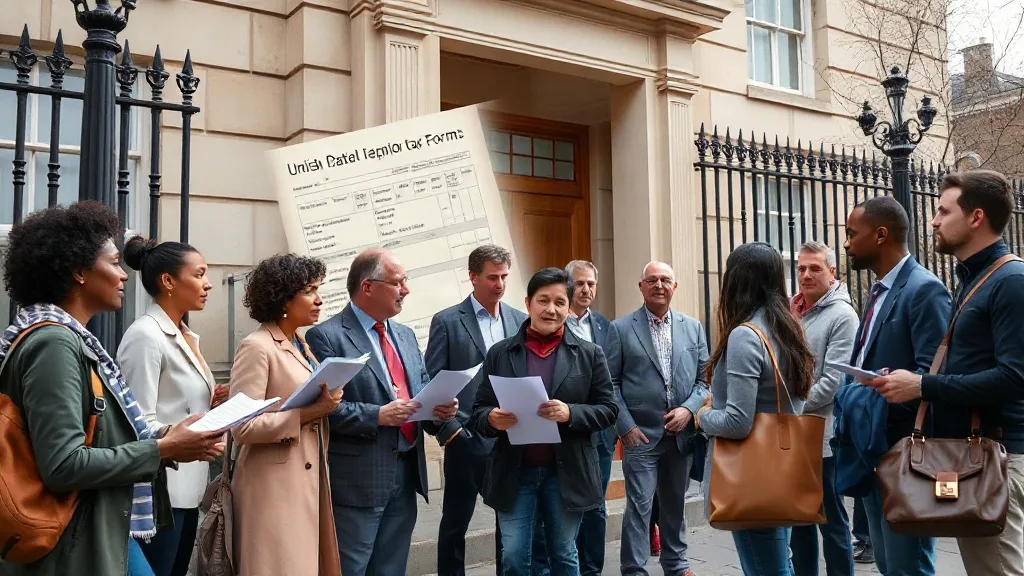
In a political landscape often defined by division, a surprising consensus has emerged on one of the most contentious issues in British politics: inheritance tax. According to recent YouGov research, 52 per cent of Britons believe that death duties should either be reduced or scrapped altogether. This finding comes as Kemi Badenoch, a prominent Conservative figure, champions a push to slash the tax, and notably, even Labour voters appear to be supportive.
The debate over inheritance tax, often referred to as death duties, is not new. It touches on deep-seated notions of fairness, family legacy, and the role of the state. But the latest polling suggests that a majority of the public is now aligned with the view that the tax is burdensome and in need of reform. This article delves into the background of the issue, the specifics of Badenoch's proposal, and what the polling data tells us about public sentiment and its potential political ramifications.
Understanding Inheritance Tax and Its Controversies
Inheritance tax (IHT) is levied on the estate of someone who has died. In the UK, it is charged at 40% on the value of an estate above a threshold, which is currently £325,000 for individuals, with additional allowances for a main residence passed to direct descendants. The tax has long been criticised as a "death tax" that penalises those who have saved and invested, and it often sparks heated debate about double taxation and its impact on families.
Critics argue that IHT discourages saving and can force the sale of family assets, such as farms or businesses, to pay the tax bill. Supporters, however, contend that it is a fair way to redistribute wealth and fund public services. The threshold has risen over the years, but many argue it has not kept pace with property price inflation, dragging more estates into the net.
Kemi Badenoch, a former business secretary and a leading figure in the Conservative Party, has been vocal about her desire to abolish inheritance tax altogether. She argues that it is a tax on aspiration and that it punishes those who have worked hard to provide for their families. Her stance resonates with many within her party and, as the polling shows, with a significant portion of the public.
The Polling Numbers: A Closer Look
The YouGov survey found that 52% of respondents believe death duties should be either cut or abolished. This is a notable majority, and it cuts across party lines. Even among Labour voters, there is support for reform, suggesting that this is not a purely partisan issue. The poll did not specify the exact split between those who want a reduction versus complete abolition, but the overall sentiment is clear: the public wants change.
This level of support is significant because it indicates that inheritance tax is a wedge issue that could benefit politicians who advocate for its reform. It also puts pressure on the Labour government, which has traditionally been more supportive of wealth redistribution, to reconsider its position. The fact that Labour voters are also in favour of cuts or abolition suggests that the party may need to tread carefully to avoid alienating its base.
The polling also comes at a time when the cost of living crisis and economic pressures are at the forefront of voters' minds. Inheritance tax may be seen as an additional burden on families already struggling with high taxes and inflation. The desire to protect family wealth and pass it on to the next generation is a powerful motivator, and politicians who tap into that sentiment may reap electoral rewards.
Kemi Badenoch's Proposal: What It Entails
Kemi Badenoch has not yet released a detailed policy paper, but her public statements indicate a clear direction: she wants to abolish inheritance tax. In a recent speech, she described it as a "morally wrong" tax that double-taxes income and savings. She argues that abolishing it would stimulate economic growth by allowing families to keep more of their wealth, which could then be invested or spent.
However, abolishing IHT would come at a significant cost to the Treasury. Inheritance tax receipts amounted to around £7 billion in the last fiscal year, according to official figures. That revenue funds essential public services such as the NHS, education, and infrastructure. Any proposal to cut or abolish the tax would need to address how that shortfall would be made up, either through other taxes, spending cuts, or borrowing.
Badenoch has suggested that the tax could be replaced by a simpler system, but she has not provided specifics. Her focus appears to be on making the case for abolition first, and then working out the details. This approach has its risks, as opponents will seize on the lack of a fully costed plan to argue that it is irresponsible.
Nevertheless, her push has ignited a debate within the Conservative Party and beyond. Some Tories see it as a winning issue that could help them regain support after a challenging period. Others worry that it could be portrayed as a tax cut for the wealthy, which could be politically damaging.
Why This Matters: The Broader Implications
The debate over inheritance tax is about more than just economics; it is about values. It raises questions about what kind of society we want to live in. Should wealth be passed down through generations, or should it be redistributed to create a more equal society? There is no easy answer, and reasonable people can disagree.
However, the polling suggests that the public is leaning towards allowing families to keep more of their wealth. This could have far-reaching consequences for tax policy in the UK. If a majority of voters support cuts, politicians of all stripes may feel compelled to act. The Labour government, in particular, may face pressure to offer some form of relief, even if it does not go as far as abolition.
Moreover, the fact that even Labour voters are supportive indicates that this is not a fringe issue. It is a mainstream concern that could influence voting behaviour. Politicians ignore it at their peril.
On the other hand, there are concerns that cutting inheritance tax could exacerbate inequality. The tax primarily affects the wealthiest estates, although the threshold has dragged more people into it. If it is abolished, the biggest beneficiaries would be the very wealthy, who stand to save millions. This could fuel resentment and undermine social cohesion.
There is also the question of how to replace the lost revenue. If the government cuts inheritance tax, it may have to raise other taxes or reduce spending, which could be unpopular. The public may support cuts in principle, but they may balk at the trade-offs when they are spelled out.
The Political Landscape and Public Sentiment
Kemi Badenoch is not the first politician to call for the abolition of inheritance tax, but she is one of the most prominent voices in the current debate. Her stance has energized sections of the Conservative Party and has forced the issue onto the agenda. It remains to be seen whether it will translate into policy, but it has certainly sparked a conversation.
The polling also highlights a potential opportunity for the Conservatives, who have been trailing in the polls. By championing a popular cause, they may be able to win back some support. However, they will need to present a credible plan that addresses the fiscal challenges.
For Labour, the challenge is to balance its traditional principles with the demands of its voters. If a significant portion of Labour supporters back cuts, the party may need to soften its stance. This could lead to internal tensions, as some members will resist any move that is seen as benefiting the rich.
Ultimately, the debate over inheritance tax reflects a broader conversation about fairness and opportunity. It is a debate that will continue to evolve as economic circumstances change and as new generations grapple with the legacy they inherit.
Frequently Asked Questions
What is inheritance tax and who pays it?
Inheritance tax is a tax on the estate of someone who has died. In the UK, it is charged at 40% on the value of an estate above the nil-rate band, which is currently £325,000. There is an additional residence nil-rate band of up to £175,000 if you pass on a main home to direct descendants. Only estates valued above these thresholds pay the tax.
Why is there a push to abolish inheritance tax?
Critics argue that inheritance tax is a double tax on income and savings, and that it penalises hard-working families. They believe it discourages saving and can force the sale of family businesses or farms. Kemi Badenoch and others argue that abolishing it would stimulate economic growth and allow families to pass on more wealth.
How much revenue does inheritance tax raise?
In the 2022/23 tax year, inheritance tax receipts were approximately £7 billion. This revenue contributes to public services. Any cut or abolition would require alternative sources of funding or spending reductions.
Do Labour voters really support cutting inheritance tax?
According to the YouGov poll, yes, a significant portion of Labour voters support cutting or abolishing inheritance tax. This cross-party support suggests that the issue transcends traditional political divides and may be more about fairness and family than party ideology.
What are the potential consequences of abolishing inheritance tax?
Abolishing inheritance tax would increase the deficit unless offset by other tax rises or spending cuts. It could also widen inequality, as the wealthiest would benefit the most. However, it could also simplify the tax system and reduce administrative burdens.