
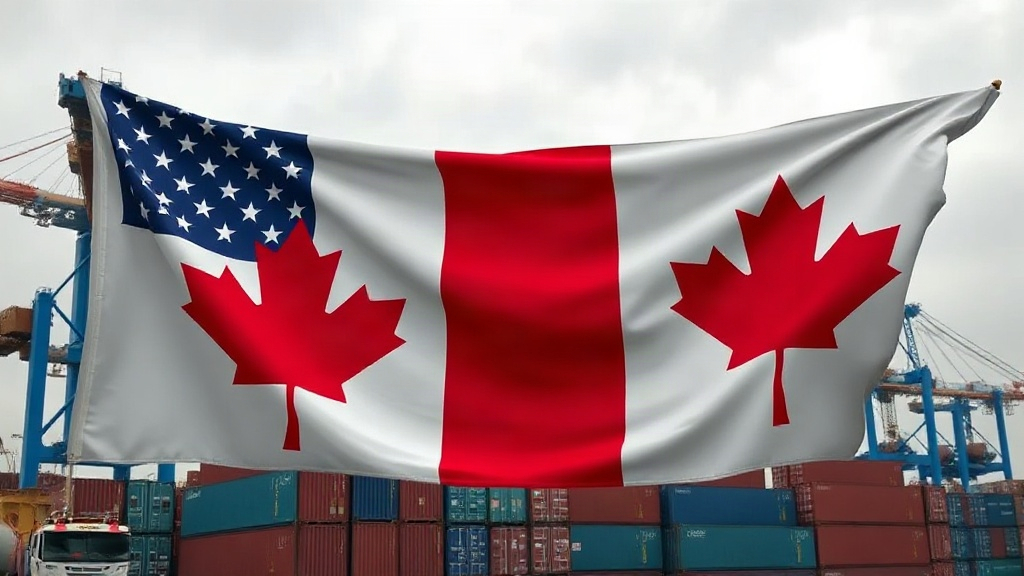
The wait is over. After weeks of warnings, counter-tariffs on $20 billion worth of American products have officially taken effect in Canada. This is not a symbolic gesture or a short-term bargaining chip. It is a deliberate, calculated move that signals Ottawa is preparing for a prolonged trade war with its closest ally and largest trading partner. The stability of the world's largest bilateral trading relationship now hangs in the balance, and the ripple effects are already being felt on factory floors, in grocery aisles, and around boardroom tables on both sides of the border.
What Just Happened: The Counter-Tariffs in Detail
Canada's new tariffs target a carefully selected list of American goods, with a total value of $20 billion. The list is broad but strategic, including steel and aluminum products, household appliances, agricultural goods like orange juice and coffee, and a range of consumer items. The goal is to apply maximum pressure on American producers and political constituencies while minimizing immediate harm to Canadian consumers. But even the best-designed tariff list cannot fully shield the economy from the shockwaves.
These counter-tariffs are a direct response to the United States' earlier imposition of tariffs on Canadian steel and aluminum under the guise of national security. Ottawa has repeatedly called those tariffs unjustified and illegal under international trade rules. By matching dollar-for-dollar, Canada is sending a clear message: it will not be bullied, and it is willing to endure short-term economic pain to defend its long-term interests.
Why a Prolonged Trade War Looks Inevitable
The most striking aspect of this latest escalation is the language coming from Ottawa. Government officials are no longer framing the dispute as a temporary misunderstanding that can be resolved with a single phone call. Instead, they are using phrases like "long haul," "protracted conflict," and "new normal." This shift in tone matters because it signals a fundamental change in strategy. Canada is no longer hoping for a quick reversal; it is planning for a marathon.
Several factors contribute to this grim outlook. First, the political climate in Washington makes compromise difficult. The current administration has shown little appetite for backing down on trade, viewing tariffs as a core part of its economic nationalism agenda. Second, the issues at stake go beyond steel and aluminum. The dispute has become entangled with broader disagreements over dairy, lumber, and even digital services taxes. Third, both sides have now invested significant political capital in the fight. Backing down without a clear win would be seen as weakness by domestic audiences.
For Canadian businesses, this means uncertainty is no longer a temporary state; it is the operating environment. Companies that rely on cross-border supply chains must now make hard decisions about sourcing, pricing, and investment. Some are already exploring alternative suppliers in Europe and Asia, while others are absorbing the cost increases and hoping for the best. The longer the dispute drags on, the more these short-term adjustments become permanent structural changes.
Winners and Losers: The Economic Fallout
No one wins a trade war, but some lose more than others. On the Canadian side, industries that depend heavily on American markets are feeling the pinch. The steel and aluminum sectors, which were the original targets of US tariffs, are now facing a double blow: reduced access to the US market and higher costs for imported American inputs. Manufacturers of appliances and other consumer goods are also squeezed, as they must either absorb the tariff costs or pass them on to customers.
Consumers on both sides of the border are the silent victims. Canadians will see higher prices for certain American products, particularly food items like orange juice and coffee, which are not easily replaced by domestic alternatives. Meanwhile, American exporters lose sales, and their workers face layoffs or reduced hours. The pain is real, even if it is spread unevenly across regions and industries.
Yet there are also some unexpected beneficiaries. Canadian producers of goods that compete with American imports, such as certain steel products and processed foods, may see a temporary boost in demand. Some businesses are already marketing themselves as "tariff-free" alternatives, appealing to patriotic consumers. However, these gains are fragile and often disappear once the trade dispute ends and normal competition resumes.
The Broader Implications for North American Trade
The current conflict is not happening in a vacuum. It is unfolding against the backdrop of the renegotiated North American free trade agreement, known in Canada as CUSMA and in the United States as USMCA. That agreement was supposed to usher in a new era of stability and predictability. Instead, it has become another battleground, with both sides accusing each other of violating its spirit and letter.
The tariffs on steel and aluminum, and Canada's counter-tariffs, are technically outside the scope of the trade agreement because they are justified under national security provisions. This loophole threatens to undermine the entire framework. If either side can impose tariffs on any product by invoking national security, then the agreement loses its teeth. Investors and businesses that were counting on the rules-based system are now questioning whether that system can survive.
Beyond economics, the trade war is straining diplomatic relations. The two countries have a long history of cooperation on security, intelligence, and environmental issues. That cooperation is not going to disappear overnight, but it is becoming harder to maintain when economic disputes dominate the relationship. Trust, once eroded, is difficult to rebuild.
What Comes Next? Scenarios and Strategies
Looking ahead, several scenarios are possible. The most optimistic is a negotiated settlement within the next six to twelve months, perhaps triggered by domestic political pressure in the United States. If American businesses and consumers start feeling the pain of higher prices and lost sales, they may push their elected officials to back down. This is the outcome Canada is hoping for, but it is far from guaranteed.
A more likely scenario is a prolonged stalemate that lasts for years. In this case, both sides would gradually adjust to the new reality, finding new suppliers and markets, and the tariffs would become a permanent feature of the economic landscape. This would be costly for everyone, but especially for Canada, which sends about 75% of its exports to the United States. Diversifying away from that market would be a massive undertaking, requiring significant investment in infrastructure and trade agreements with other countries.
There is also the risk of escalation. The United States could respond to Canada's counter-tariffs with additional tariffs of its own, targeting even more products. Canada would then have to decide whether to escalate further or seek a truce. Each round of escalation increases the economic damage and makes a diplomatic solution harder to achieve.
For businesses, the best strategy is to prepare for the worst while hoping for the best. That means reviewing supply chains, exploring alternative markets, and building financial reserves to weather the storm. It also means staying informed about the latest developments, because the situation can change quickly. In a trade war, information is power.
Public Sentiment and Political Dynamics
Public opinion in Canada is largely supportive of the government's tough stance, at least for now. Many Canadians see the tariffs as an attack on their sovereignty and are willing to pay a bit more to stand up to the United States. This patriotic sentiment gives the government political cover to maintain its position. However, if the economic pain becomes too severe, that support could erode quickly.
In the United States, the political calculus is different. The tariffs on Canadian steel and aluminum are popular in certain industrial states, but they are opposed by many businesses and free-trade advocates. The administration is betting that the political benefits will outweigh the economic costs. Whether that bet pays off remains to be seen, especially as the 2024 election approaches.
The Human Cost: Beyond the Numbers
Behind the statistics and policy debates are real people whose lives are being disrupted. Workers in affected industries face an uncertain future. Families are seeing their grocery bills rise. Small business owners are struggling to make ends meet. The trade war is not just an abstract economic concept; it is a daily reality for millions of people.
One steelworker in Hamilton, Ontario, who asked not to be named, summed up the mood: "We've been through tough times before, but this feels different. It's like we're fighting a war with our own family. Nobody wins that." His words capture the frustration and sadness that many feel on both sides of the border.
Lessons from History: Trade Wars Rarely End Well
History offers some sobering lessons. Trade wars have a tendency to spiral out of control, as each side retaliates and the original grievances become buried under layers of new ones. The Smoot-Hawley Tariff Act of 1930, which raised US tariffs on thousands of imported goods, is widely blamed for deepening the Great Depression. More recently, the US-China trade war that began in 2018 caused significant economic disruption without achieving its stated goals.
Canada and the United States have avoided such destructive conflicts in the past, largely because of their deep economic integration and shared values. But that integration is now being tested as never before. The question is whether the two countries can find a way back from the brink before lasting damage is done.
Conclusion: A Test of Resilience
Canada's counter-tariffs on $20 billion worth of American goods mark a turning point in the bilateral relationship. They are a sign that Ottawa is bracing for a prolonged trade war, not a quick skirmish. The economic and political stakes are enormous, and the outcome is uncertain. What is clear is that both countries will need resilience, creativity, and a willingness to compromise if they hope to avoid a lose-lose outcome. The world is watching to see whether North America's economic partnership can survive this test.
Frequently Asked Questions
What products are covered by Canada's counter-tariffs on the US?
Canada's counter-tariffs apply to $20 billion worth of American products, including steel and aluminum, household appliances, orange juice, coffee, and various agricultural and consumer goods. The list is designed to target products that can be sourced elsewhere or produced domestically, minimizing harm to Canadian consumers while maximizing pressure on American producers.
Why did Canada impose counter-tariffs on the United States?
Canada imposed counter-tariffs in direct response to the United States' tariffs on Canadian steel and aluminum, which the US justified on national security grounds. Canada considers those tariffs unjustified and illegal under international trade rules, and the counter-tariffs are intended to pressure the US to remove them.
How long is the trade war between Canada and the US expected to last?
There is no clear timeline, but officials in Ottawa have signaled that they are preparing for a prolonged conflict. The dispute has become entangled with broader trade issues, and both sides have invested significant political capital. A resolution could come quickly if political pressure mounts in the US, but a stalemate lasting years is also possible.
How will the counter-tariffs affect Canadian consumers?
Canadian consumers will likely see higher prices for certain American products, especially food items like orange juice and coffee that are not easily replaced by domestic alternatives. However, the government has tried to minimize the impact by targeting products that can be sourced from other countries or produced in Canada.
What can Canadian businesses do to cope with the trade war?
Businesses should review their supply chains, explore alternative suppliers in Europe and Asia, and consider adjusting their pricing strategies. Building financial reserves and staying informed about the latest developments are also crucial. Some companies are marketing themselves as tariff-free alternatives, which may appeal to patriotic consumers.