
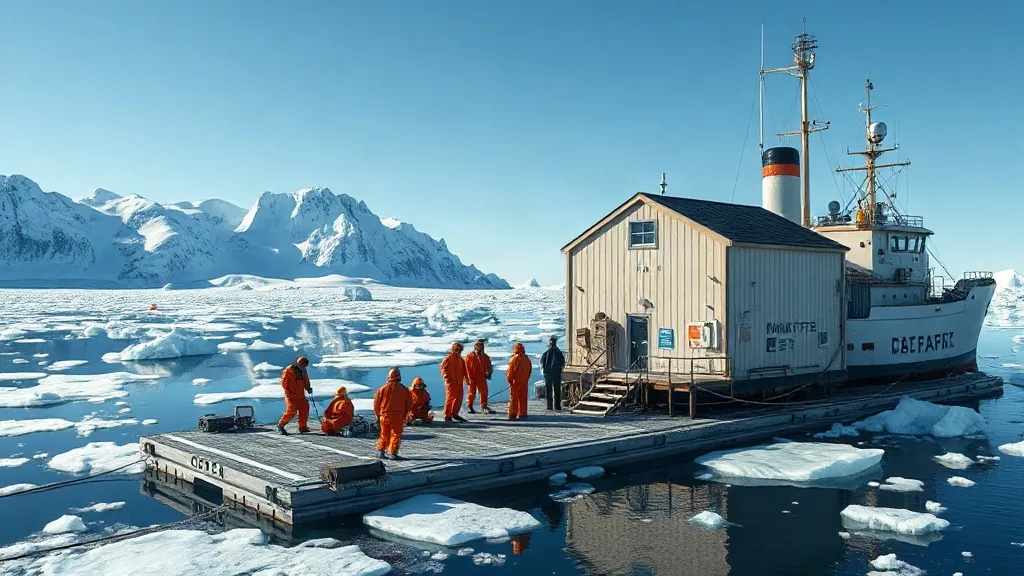
In the vast white expanse of Antarctica, where extreme cold and isolation define daily life, a critical piece of infrastructure is under threat. The Antarctic port, which serves as a lifeline for research stations and is home to the world's southernmost post office, is facing the relentless advance of climate change. Now, a dedicated team has been assembled to save it.
The port, located on the Antarctic Peninsula, is a hub for supplies and personnel. But rising temperatures have accelerated ice melt, causing sea levels to rise and threatening the stability of the pier. The post office, a quirky landmark that handles thousands of postcards each year, symbolizes human presence in this remote wilderness. Its potential loss is both practical and symbolic.
Why This Port Matters
The Antarctic port is not just a docking station; it's the gateway for scientific research that helps us understand global climate patterns. Without it, resupply missions become riskier, and the continuity of long-term studies is jeopardized. The post office, operating since the mid-20th century, is a morale booster for researchers and a tangible link to the outside world.
Climate change impacts here are amplified. The Antarctic Peninsula is one of the fastest-warming regions on Earth. Ice shelves have retreated dramatically, and glaciers are thinning. For the port, this means more frequent storms, shifting ice, and unstable ground. The new team's mission is to adapt the infrastructure to these changing conditions.
Meet the Team and Their Plan
The team comprises engineers, climate scientists, and logistics experts. Their approach combines immediate repairs with long-term resilience. They are assessing the structural integrity of the pier and considering relocation to a more stable site. Climate adaptation is at the heart of their strategy, focusing on solutions that can withstand future changes.
One innovative idea is to use modular, floating platforms that can rise with sea levels. Another is to reinforce the existing structure with advanced materials that resist corrosion and ice damage. The team is also working on better forecasting of ice conditions to ensure safe access.
Challenges on the Ice
Working in Antarctica is logistically demanding. The window for construction is short, limited to the austral summer. Materials must be shipped in, and every piece of equipment is precious. The team must also minimize their environmental footprint, adhering to strict protocols to protect the pristine environment.
Funding is another hurdle. While the mission has initial support, long-term maintenance requires sustained investment. The team is advocating for international collaboration, as the port serves multiple nations' research programs.
The Broader Implications
What happens at this port is a microcosm of global climate challenges. Coastal communities worldwide face similar threats. The solutions developed here could inform adaptation strategies elsewhere. Moreover, the port's survival is crucial for monitoring Antarctic ice loss, which directly affects sea levels globally.
The post office, though small, represents human resilience and the importance of connection. Saving it is about preserving access to this fragile continent and the scientific knowledge it yields.
Looking Ahead
The team's work is just beginning. Over the next few years, they will implement pilot projects and monitor their effectiveness. Success will depend on adaptability and continued research. As climate change accelerates, such proactive measures become not just prudent but essential.
For now, the team remains optimistic. Their efforts underscore a simple truth: even in the most remote places, human ingenuity and cooperation can make a difference. The Antarctic port, and its unique post office, may yet endure.
Frequently Asked Questions
Why is the Antarctic port important?
The port is a vital supply line for research stations and a hub for scientific activities that monitor climate change. It also houses the world's southernmost post office, which is a unique landmark.
How is climate change affecting the port?
Rising temperatures cause ice melt, sea level rise, and more extreme weather, which destabilize the port's infrastructure and make access more difficult.
What is the new team doing to save the port?
The team is assessing damage, reinforcing structures, and exploring relocation. They are also developing modular platforms and improved ice forecasting to adapt to changing conditions.
Can the port be relocated?
Relocation is one option being considered, but it poses logistical and environmental challenges. The team is evaluating the best long-term solution.
How can the public help?
Supporting climate research and advocating for policies that reduce emissions are key. Additionally, raising awareness about the importance of Antarctic infrastructure can drive international cooperation.