
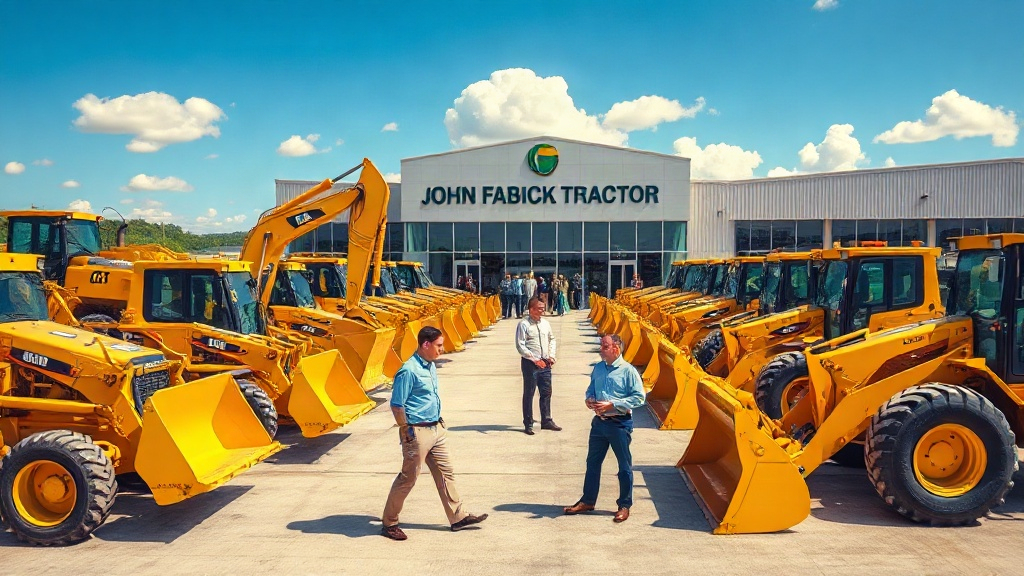
Caterpillar Inc. (NYSE: CAT) announced on Tuesday an agreement to acquire John Fabick Tractor Co., a family-owned dealership that has sold and serviced Cat equipment for generations. The terms of the transaction were not disclosed. While the news may seem like just another corporate acquisition, it signals a deeper shift in how the heavy equipment giant manages its distribution network and could have ripple effects for customers, competitors, and the industry at large.
John Fabick Tractor, based in Fenton, Missouri, has been a Caterpillar dealer since 1922. Its territory spans eastern Missouri and southern Illinois, a region that includes St. Louis and several key infrastructure and agricultural markets. The dealership employs hundreds of people and operates multiple locations. By bringing Fabick under its corporate umbrella, Caterpillar gains direct control over a critical link in its sales and service chain.
Why Caterpillar Is Buying a Dealer
Caterpillar's business model has long relied on independent dealers to sell, rent, and service its machines. This decentralized approach allows local entrepreneurs to build deep customer relationships and respond quickly to regional needs. However, in recent years, Caterpillar has selectively acquired dealerships, particularly when succession issues arise or when it sees opportunities to improve performance. The Fabick acquisition fits this pattern.
John Fabick Tractor is a legacy Cat dealer with a strong reputation, but like many family-owned businesses, it may have faced succession challenges. By acquiring the dealership, Caterpillar ensures continuity of service and can implement its latest digital tools and processes more directly. It also prevents the territory from falling into the hands of a competitor or being fragmented.
Moreover, Caterpillar has been investing heavily in technology and data analytics to better serve customers. Owning a dealership gives the company a testing ground for new initiatives, from predictive maintenance to integrated fleet management. The Fabick territory, with its mix of urban and rural customers, offers a diverse set of use cases.
What This Means for Customers
For customers in eastern Missouri and southern Illinois, the immediate impact is likely minimal. Day-to-day operations should continue as usual, and the same people will still be selling and servicing equipment. However, over time, customers may see changes in how they interact with the dealership.
On the positive side, Caterpillar's direct ownership could lead to more consistent pricing, better availability of parts, and faster adoption of new technologies. The company might also invest in upgrading facilities and training programs. On the other hand, some customers worry that a corporate-owned dealership could be less flexible and more focused on quarterly targets than on long-term relationships.
It's worth noting that Caterpillar has acquired dealerships before, such as in 2018 when it bought the assets of several dealers in Brazil. Those transitions were generally smooth, but each market is different. The key will be how well Caterpillar manages the cultural shift from a family-run business to a corporate division.
The Bigger Picture: Consolidation in the Dealer Network
The acquisition of John Fabick Tractor is part of a broader trend of consolidation in the equipment dealership world. Across industries, small, independent dealers are being snapped up by larger groups or by manufacturers themselves. This is driven by economies of scale, the need for significant capital investment in digital tools, and the challenges of succession planning.
For Caterpillar, owning more dealerships means greater control over the customer experience and the ability to capture more revenue from parts and services, which are higher-margin than equipment sales. It also allows the company to present a unified front in negotiations with large customers, such as construction firms and government agencies.
However, there are risks. Independent dealers often have deep community ties and entrepreneurial drive that can be hard to replicate within a large corporation. If Caterpillar pushes too hard on standardization, it could alienate customers who value the personal touch. The company will need to strike a balance between leveraging its scale and preserving what made Fabick successful.
Competitive Landscape
Caterpillar's main competitors, including Komatsu, John Deere, and Volvo Construction Equipment, also rely on dealer networks. Some have also acquired dealerships in strategic markets. The move by Caterpillar could prompt competitors to reconsider their own distribution strategies in the region.
For now, the Fabick acquisition is a single event, but it could set a precedent for other dealership acquisitions in the U.S. If Caterpillar sees improved performance in this territory, it may look to replicate the model elsewhere. That could lead to further consolidation and a more vertically integrated Caterpillar.
Financial Implications
Caterpillar has not disclosed the purchase price, but the deal is unlikely to be material to its overall financials. The company generated over $50 billion in revenue in 2023, so even a large dealership acquisition would be a drop in the bucket. However, the strategic value could be significant if it leads to better margins and customer loyalty.
Investors will be watching to see if Caterpillar provides any details on the expected financial impact. In the meantime, the company's stock has been relatively stable, and analysts have not raised any red flags. The acquisition is seen as a prudent move to strengthen a key part of the business.
What Happens Next?
The transaction is subject to customary closing conditions, including regulatory approvals. It is expected to close in the coming months. Until then, John Fabick Tractor will continue to operate as an independent dealer. After closing, Caterpillar will integrate the dealership into its corporate structure, though the Fabick name may be retained for its brand equity.
Employees are likely to be retained, as the dealership's workforce is essential to maintaining service levels. Caterpillar has a history of retaining talent in acquired dealerships, recognizing that experienced technicians and salespeople are hard to replace.
Frequently Asked Questions
Why did Caterpillar acquire John Fabick Tractor?
Caterpillar likely saw an opportunity to secure a key market, ensure continuity of a legacy dealership, and gain direct control over distribution in a region with significant construction and agricultural activity. The acquisition also aligns with Caterpillar's strategy to invest in digital tools and improve customer service.
Will the dealership name change?
Caterpillar has not announced any name change. It is possible that the John Fabick Tractor name will be retained, at least in the short term, to leverage its strong local brand recognition. Over time, Caterpillar may rebrand it to align with its corporate identity.
How will this affect equipment prices and service?
In the near term, prices and service should remain stable. Over time, Caterpillar may standardize pricing and introduce new service offerings. Customers could benefit from more consistent experiences, but some may miss the flexibility of a family-owned dealer.
Are other Caterpillar dealers at risk of being acquired?
While Caterpillar has not indicated a broad roll-up strategy, it may consider acquisitions where dealers face succession issues or where it sees strategic value. The Fabick deal could be a template for future moves, but each situation is unique.
What does this mean for the heavy equipment industry?
It signals a continuing trend of consolidation. Manufacturers are seeking more control over distribution to better compete and to capture aftermarket revenue. Other OEMs may follow suit, leading to a more integrated landscape.